How is the dismantling market for wind turbines developing? What role do new standards, digital technologies and economic framework conditions play? ...

United Kingdom introduces ADLS for wind turbines
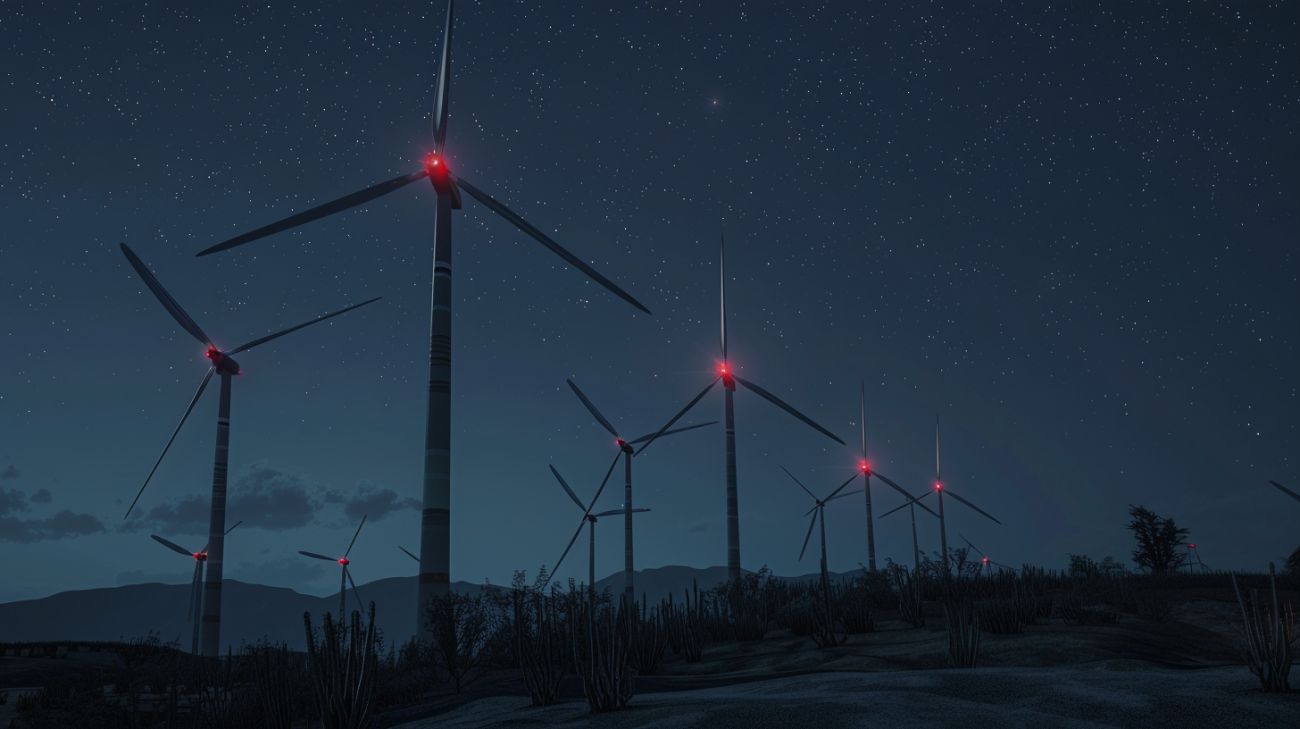
The UK Civil Aviation Authority (CAA) has published Edition 7 of CAP 764: CAA Policy and Guidelines on Wind Turbines, formally permitting the use of Aviation Detection Lighting Systems (ADLS) on wind turbines from 17th December 2025. The update marks a major regulatory milestone for the UK wind industry, enabling developers to significantly reduce the visual impact of obstacle lighting while maintaining aviation safety.
The decision comes at a time when the United Kingdom has firmly established itself as a global wind power leader. With 28.5 GW of installed capacity in 2023, the UK ranks as the world’s sixth-largest wind power market. In May 2023, wind energy became the country’s largest source of electricity for the first time.
Despite this rapid expansion, the regulatory framework for ADLS had long been absent. While wind farm lighting has remained a frequent point of contention for local communities, clear national guidance on demand-controlled systems was missing for years. The industry sought to address this gap independently: in 2021, ScottishPower Renewables submitted a proposal to the CAA outlining measures to mitigate visual impact, including the use of transponder-based ADLS.
With the publication of CAP 764 Edition 7, the CAA has now established a formal pathway for ADLS deployment. The revised guidance explicitly allows both transponder-based and radar-based detection systems, providing flexibility depending on regional aviation requirements, such as the presence of Transponder Mandatory Zones.
Technology providers have welcomed the regulatory clarity. Light:Guard, together with its sister company Senture GmbH, offers both transponder- and radar-based ADLS solutions, drawing on extensive operational experience from Germany and international markets.
For wind farm operators and project developers in the United Kingdom, the updated CAP represents an opportunity to reduce night-time visual impact, improve public acceptance, and align future projects with a clearly defined regulatory framework.
How is the dismantling market for wind turbines developing? What role do new standards, digital technologies and economic framework conditions play? ...
Since 1986 we develop solutions for meteorology, remote sensing, mobile Energy supply and environmental monitoring. What started as a small private ...
New three-year contract covers the BNK equipment of around 130 turbines in more than 20 wind farms – including numerous new construction and ...
Wind turbines are under constant mechanical stress. Vertical ladders, crane systems and service lifts provide daily access for maintenance and repair. ...