Selling Project Rights: What Sellers Should Know About Timing, Valuation and Buyer Market in 2026
Anyone who holds project rights for wind energy is at some point faced with a strategic decision: develop it yourself or sell it now? The answer will depend on different factors in 2026 than it did just a few years ago. Buyer profiles have shifted, pricing follows new rules, and the timing of the sale has a greater impact on the achievable price than the pure level of development. Those who understand this sell better.
Why 2026 is a good year to sell wind energy project rights
Project developers sell project rights for different reasons. Some need capital for new projects, others cannot drive a project to the point of readiness for construction themselves for a variety of reasons. Still others realize that the current market value of their project rights is higher than what they would achieve in the foreseeable future through their own further development.
What all these situations have in common in 2026 is that the window of opportunity for good sales conditions is open, but it is getting narrower. Institutional investors are actively looking for early-stage projects because the RTB market has become too expensive and competitive for them. These buyers bring capital strength and the ability to conclude contracts with them – but also clear price expectations. They do not buy out of enthusiasm, but on the basis of calculated risk-return profiles.
For sellers, this means that the demand is there, but it is demanding. Anyone who now brings their wind energy project rights to the market in a structured way will meet buyers who are capable of making decisions. If you wait too long, you risk more projects entering the market and tipping your negotiating position.
What determines the value of your wind energy project right
Many sellers base their price on what they have invested in the development. This is understandable, but it is the wrong anchor in the current market. Buyers don't calculate backwards – they calculate forwards. The question on the buyer's side is not what the project has cost so far, but what it will be worth under realistic assumptions when it is ready for construction and what risks still stand in the way until then.
The strongest price driver is therefore the distance to approval. A project right in the early securing of land is assessed fundamentally differently than one with an ongoing approval procedure and a positive history of the authorities. The jump in valuation between these two stages is the largest in the entire project cycle – and it is precisely here that it is decided whether a seller achieves a good or a very good price.
In addition, factors that sellers often take for granted, but which are significantly price-relevant for buyers, are included in the evaluation:
- How reliable are the wind reports?
- How long-term and legally secure are the regional contracts?
- Are there already consultations with the grid operator?
- Is there a realistic project layout?
Each of these elements reduces the remaining risk from the buyer's point of view, and every percent less risk translates directly into a higher purchase price.
In addition, there are macroeconomic factors in 2026 that sellers should keep an eye on. Electricity price forecasts, construction cost development and financing conditions influence how buyers estimate the future project value when it is ready for construction. If the electricity price forecasts fall, the calculated exit value falls, and with it what an investor is willing to pay today. This dynamic runs independently of the development progress of the individual project and is one more argument for sellers not to delay the time of sale indefinitely.
Sell wind energy projects yourself – or rather have them marketed?
Basically, there are two ways to sell project rights via wind-turbine.com, and both have their justification. Which one is the right one depends less on the project than on the question of how much time and marketing expertise a salesperson brings to the table.
Those who have a lot of experience in the transaction business, know their buyer environment and have the capacity to coordinate enquiries, prepare documents and conduct price negotiations can independently post their project rights on the platform and manage the process on their own.
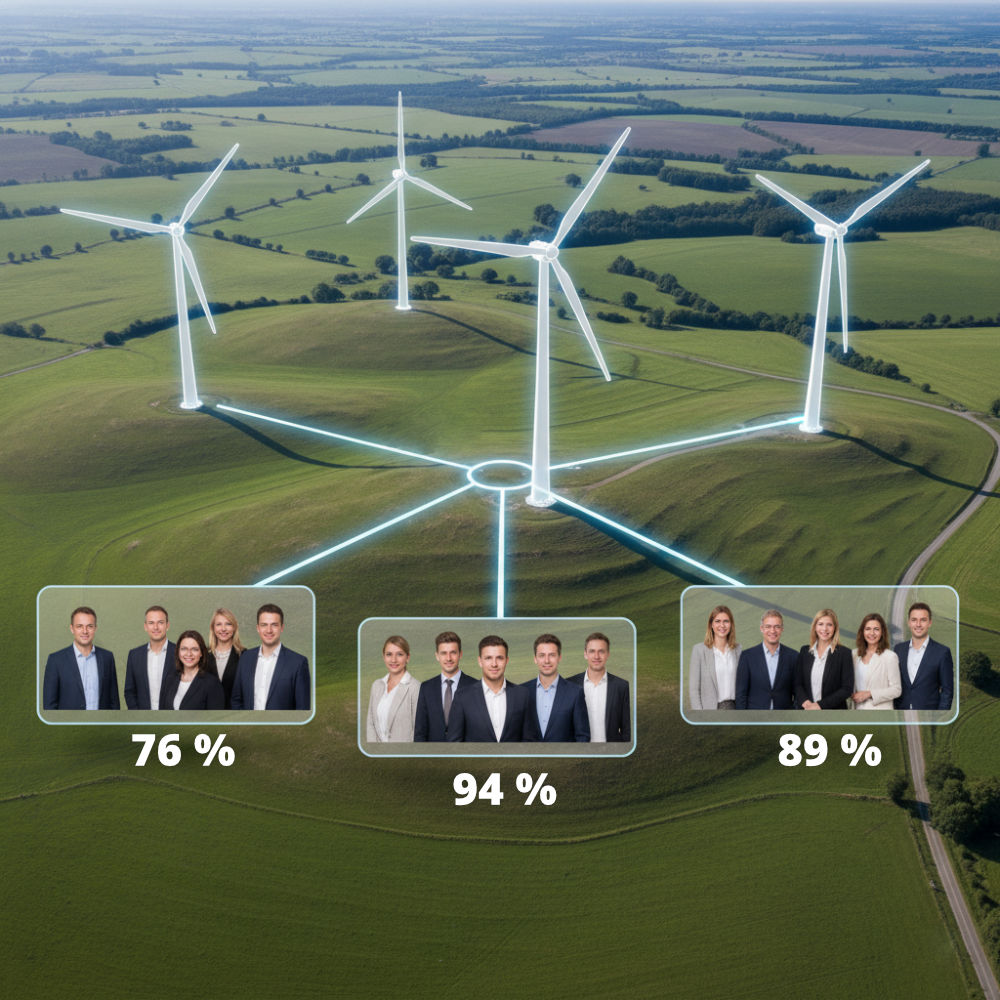
On the other hand, if you are selling project rights for the first time, if you are in the development of other projects at the same time, or if you simply want to ensure that your project rights reach the best possible price, supported marketing is worthwhile. The difference lies not only in the reach – over 500 active investors in the network – but above all in the preparation and targeted approach. A professionally marketed project right generates a different level of trust among investors than a self-placed advertisement. This is reflected in the price.
The costs for this are manageable and purely performance-dependent: between 2.5 and 5 percent commission, due only after receipt of payment. This means that wind-turbine.com shares the marketing risk. If no sale is made, the seller pays nothing.
Conclusion: 2026 Don't wait long to sell wind energy project rights
The market for wind energy project rights will be active in 2026, and demand from institutions is growing – but the requirements for processing, timing and pricing are increasing with it. Those who now bring their project rights to the market in a structured way will meet buyers who are capable of making decisions. Those who wait risk worse conditions in a market that is increasingly determined by supply.
Post your project rights on wind-turbine.com now – or talk directly to our team about the right marketing strategy!