Since 1986 we develop solutions for meteorology, remote sensing, mobile Energy supply and environmental monitoring. What started as a small private ...

Wind market 2026: When the pipeline is no longer sustainable.
Wind projects under pressure: TAVOA draws attention to outdated valuation assumptions. Tilo Reimann, Managing Director of TAVOA GmbH, identifies structural undesirable developments in the wind energy market: Project valuations are often based on assumptions that no longer reflect the economic reality in 2026. Increased costs, falling award values and scarce network capacities require a consistent reassessment of each pipeline – according to the probability of realisation instead of the state of development.
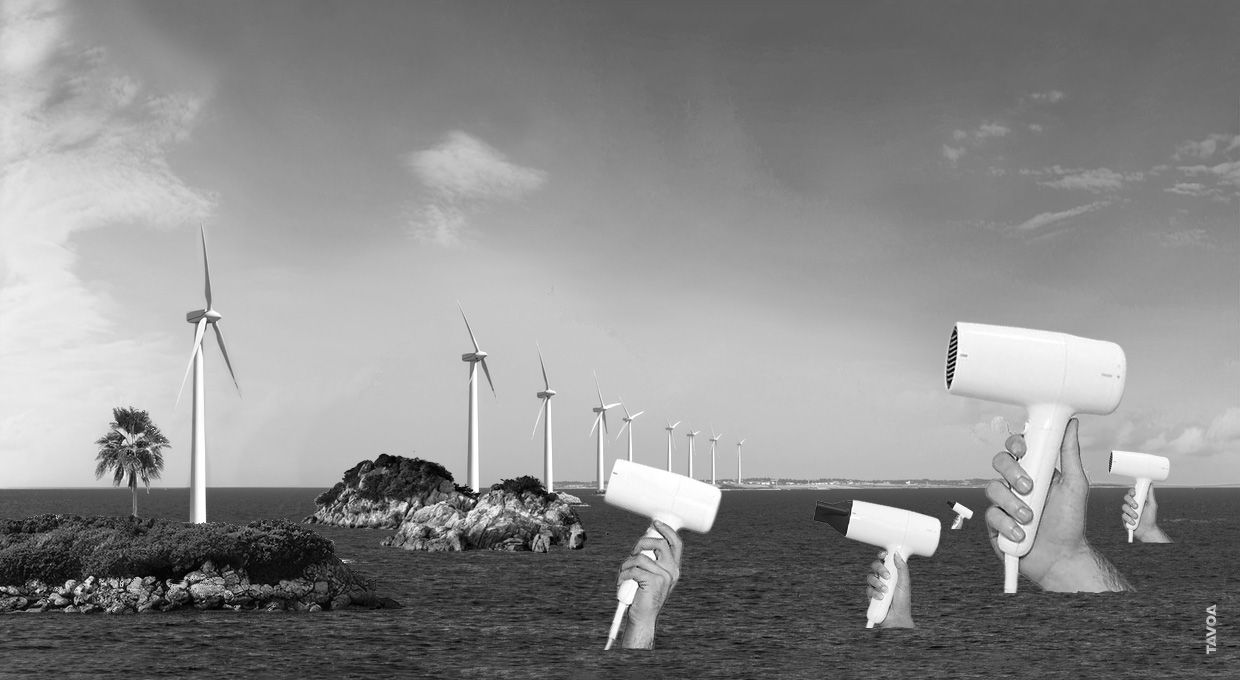
Bernd Weidmann in conversation with Tilo Reimann, Managing Director of TAVOA GmbH
Bernd Weidmann: Tilo, you published an article in February that caused quite a stir in the industry. Today we want to go deeper. What's on your mind right now?
Tilo Reimann: To be honest: the gap between what project developers think they know and what the market is currently playing back to them. This gap is widening. And it doesn't happen because people work badly. It arises because the tools used to evaluate are lagging behind reality.
Bernd Weidmann: Where exactly do you see this gap?
Tilo Reimann: Most clearly in the timeline. A project that was calculated two years ago is a different project today, even if it is the same on paper. The BWE confirmed this in black and white in January: On average, there are almost two years between the award of the contract and commissioning. During this time, the entire economic environment turns. Interest rates, component prices, grid capacities – everything is moving. Anyone who does not price this in is sitting on a set of figures that has never reflected today's reality.
Bernd Weidmann: What figures prove this?
Tilo Reimann: Deutsche WindGuard has measured it: Levelized costs of electricity for onshore wind have risen by almost 45 percent between 2021 and 2025. At the same time, the award values in the tenders are going down, most recently to 6.06 ct/kWh in November 2025. When experts now talk about possible values below 5.5 ct/kWh for 2026, we are talking about a decline in revenue of a quarter compared to 2024. This is not a market correction – this is a structural shift.
Bernd Weidmann: What does this mean in concrete terms for project evaluation?
Tilo Reimann: It means that the cost side and the revenue side live in completely different worlds today. Costs can still be calculated: plant, foundation, network, lease, maintenance. This is challenging, but feasible. The revenue side, on the other hand, is increasingly unpredictable. Surcharge values are falling, the direct marketing market is complex, PPAs sound attractive, but their conditions depend on so many variables that they only stabilize if they are built into the modeling from the beginning. Many do so too late.
Bernd Weidmann: What are the parameters that you are paying particular attention to today?
Tilo Reimann: Three things. Firstly, does the project have a secure grid connection with a binding deadline? Because every postponement not only costs time, but also liquidity and changes the entire tender framework. In 2025, dena clearly demonstrated that grid access will become the narrowest bottleneck in the energy transition. And the current political debate at the federal level does not make it any better.
Secondly, how is the operating cost structure set up? Around 64 percent of the operating costs are fixed and must be covered by stable revenues. Viewing maintenance contracts in isolation is a mistake. They absolutely belong in the context of the marketing strategy.
Third: Is there a citizen participation model? That sounds like a soft factor, but it is a hard economic factor. Projects with real citizen participation run more stably through approval procedures and have significantly lower risk of lawsuits. This is directly reflected in the timeline.
Bernd Weidmann: What do you ask project developers when they come to you?
Tilo Reimann: I ask her which of her projects she herself occupies at night. That reveals more than any table. Behind this are almost always the same unsolved questions: When is it still worthwhile to continue investing? At what point does a partner make more sense than in-house development? And when is the time to sell – before the market decides, not me? These are not comfortable questions. But they are the real work.
Bernd Weidmann: How does TAVOA help with this?
Tilo Reimann: Basically, we assess projects from two angles at the same time – as a developer and as an investor. With regard to the marketing of a pipeline, we look specifically through the lens of the investor. That is the crucial difference. We sort out obstacles: What can be solved technically? What has a regulatory time dimension? What is economic and requires a reassessment of priorities? This image gives rise to concrete options for action. Not as pressure, but as orientation. Because those who decide under pressure almost always overlook exactly the option that would have been worth the most.
Bernd Weidmann: You talk about agile thinking. What does this mean in practice?
Tilo Reimann: It means managing a pipeline not like an archive, but managing it like a living portfolio. Each project has a degree of maturity, probability of realization, and economic viability, and all three change. Those who check this regularly make better decisions. If you wait until the market forces you, you lose options. The BWE expects a possible expansion of 8 to 8.5 GW for 2026, but only if the speed of implementation continues. The bottleneck is no longer the permit. It is the implementation.
Bernd Weidmann: Finally, what advice do you have for someone who is currently sitting on their pipeline and doesn't know what to do?
Tilo Reimann: Stop waiting. Not in the sense of: sell everything immediately. But in the sense of: get clarity. About the actual value of each individual project today – not what it once had or could have. About the timeline. On the revenue side. And then make decisions on that basis, not on the basis of hope. We help with this – as a sparring partner, as a transaction companion, or simply as someone who looks at it objectively from the outside. Not because you have to. But because clarity is worthwhile.
Bernd Weidmann: Tilo, thank you for this honest conversation.
Tilo Reimann: Gladly
March 2026 | Bernd Weidmann in conversation with Tilo Reimann | TAVOA GmbH
Since 1986 we develop solutions for meteorology, remote sensing, mobile Energy supply and environmental monitoring. What started as a small private ...
New three-year contract covers the BNK equipment of around 130 turbines in more than 20 wind farms – including numerous new construction and ...
Wind turbines are under constant mechanical stress. Vertical ladders, crane systems and service lifts provide daily access for maintenance and repair. ...
Light:Guard GmbH has implemented a pilot project for an Aircraft Detection Lighting System (ADLS) at the Sønder Bork wind farm in Denmark. Over a ...