Since 1986 we develop solutions for meteorology, remote sensing, mobile Energy supply and environmental monitoring. What started as a small private ...

The market has decided: wind farms are not valued according to hope – but according to safety
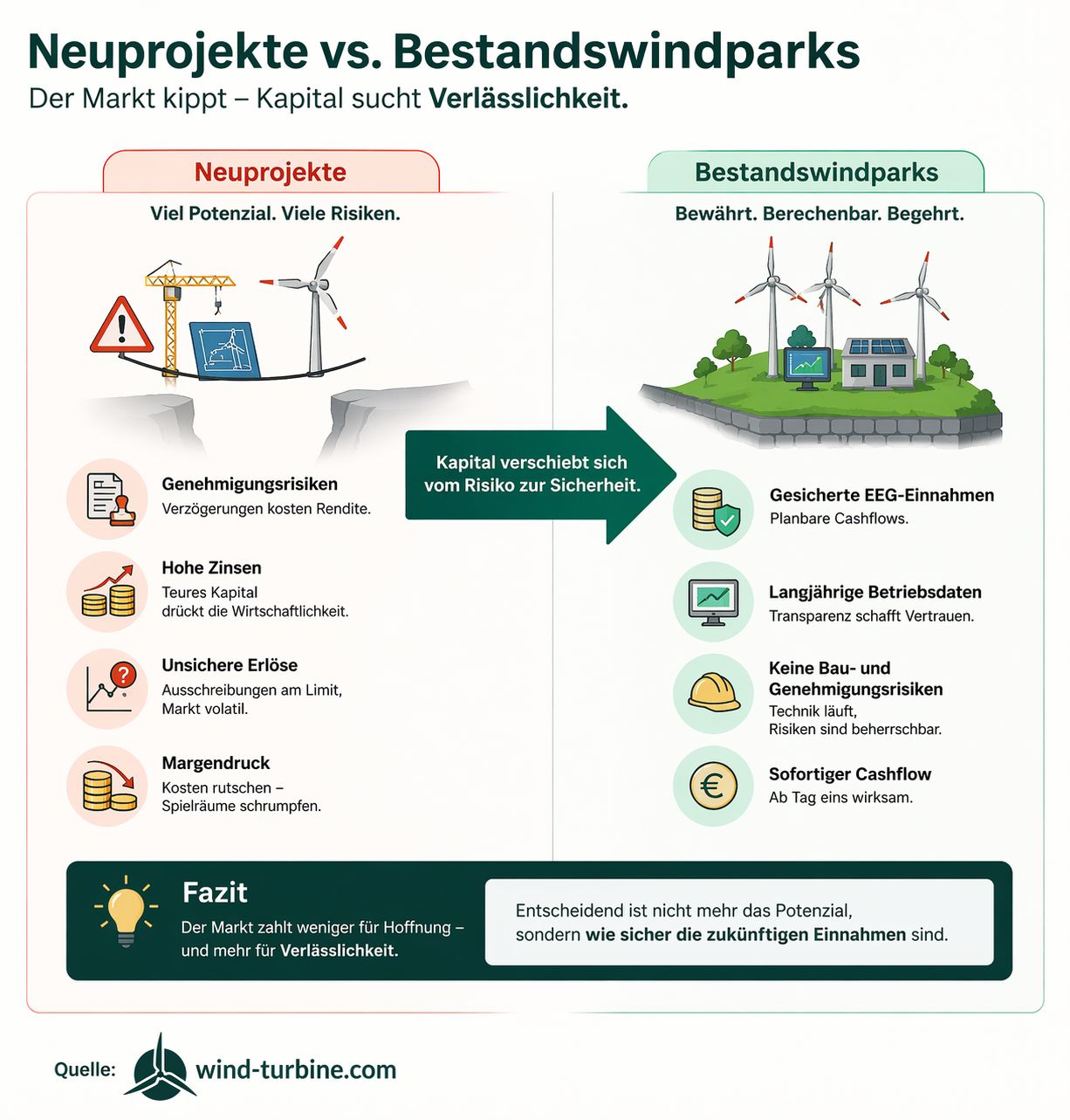
The 2026 wind market has not lost its charm – it has only changed its rules of the game. The tender results from the spring speak for themselves: surcharges of 5.2–6.1 ct/kWh, increased interest rates, falling margins. New projects only pay off under ideal conditions – without delays, without cost slides, without external shocks. This is not balance, this is a tightrope act with a headwind. The good news is that anyone who operates an existing park is suddenly sitting on a coveted asset. Because while new projects juggle uncertainties, existing investments offer what investors love most right now: stability, predictability and cash flow from day one. Capital seeks security – and finds it in existing buildings. This editorial is aimed specifically at operators of existing wind farms who are thinking about selling or want to reassess their strategic positioning. The article is supplemented by an expert interview at the end.
A
Rethinking the market
For investors, this means
current market environment. Falling remuneration, higher
Competitive pressure and more conservative calculations make new construction projects
demanding. The risk is increasing – and with it caution.
At the same time, the
Capital allocation: away from new projects and towards existing assets.
Existing wind farms are no longer seen as a temporary solution, but as a
independent, valuable infrastructure investments.
Why
Existing parks are currently in high demand
The recipe is simple, but
Effective:
Institutional investors in particular
appreciate this mix – less surprise, more predictability.
The decisive factors are:
Repowering remains important – will
but more as an option , no longer as automatic
priced-in value driver.
What
operators can do now
Who wants to ensure the value of his park
should deliver one thing above all: reliability.
Not everything has to be implemented –
But everything should be thought through, documented and explainable .
The
right time
The optimal time to sell
is often several years before the end of the EEG. Then cash flows are
and uncertainties are still moderate. Who waits until it's all over,
often does not sell peace – but risk.
Conclusion
The 2026 market is not
deteriorated. It's just more demanding. The decisive factor is not
more about the past of a wind farm, but about its future viability.
Three
Questions to the expert Tilo Reimann from Tavoa ( www.tavoa.de ). Three clear answers – and what they mean for operators
After the
In view of the new market environment, we ask TAVOA the following questions. Here are the
short, honest answers – without technical jargon, but with plain language.
1. Have
we reach a new balance in the tenders?
The
As a consequence, the market takes a closer look – and consistently assesses the future viability,
not past successes.
2. How
the valuations of existing wind farms will develop over the next 3-5
years?
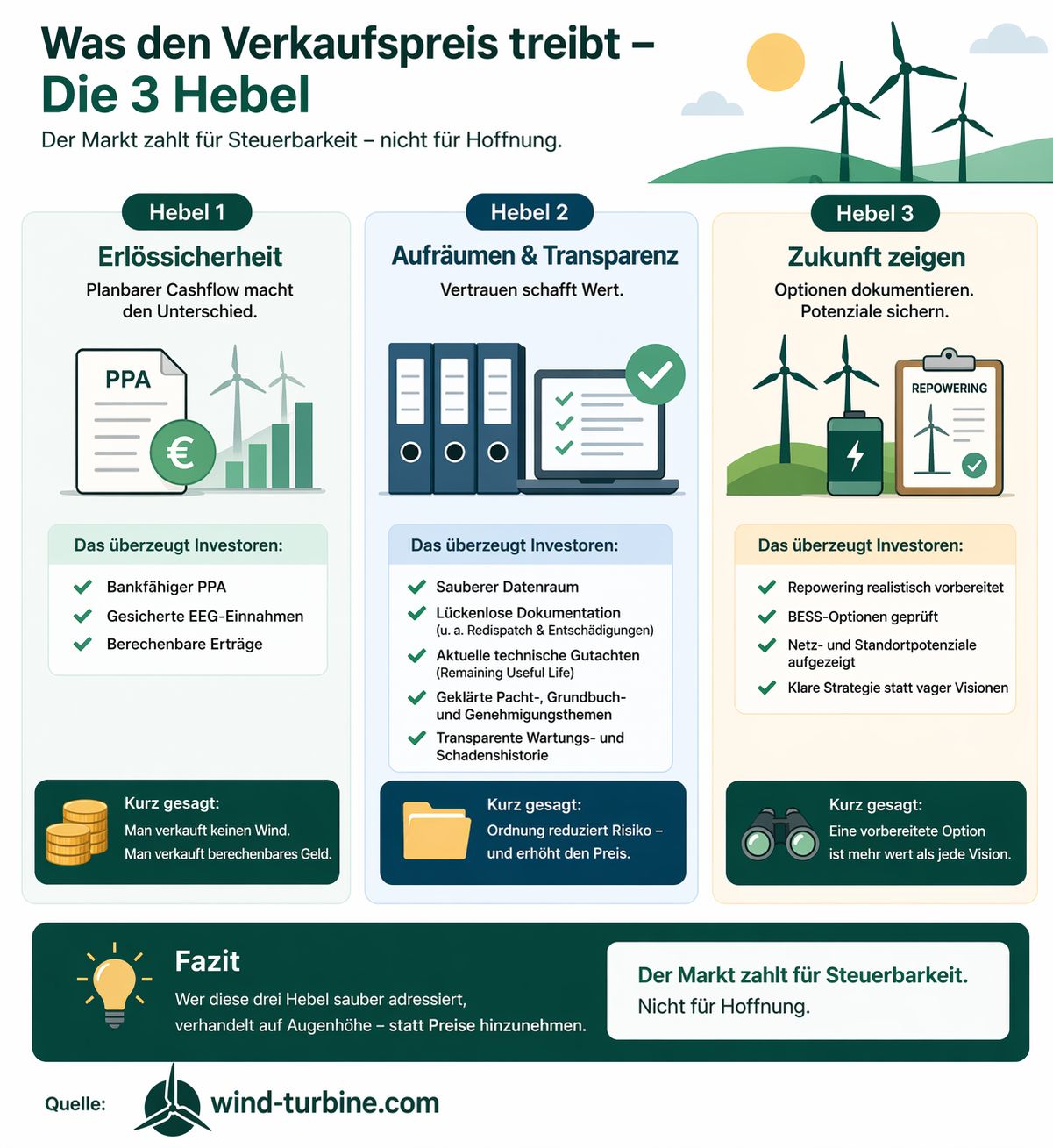
First:
Revenue security.
Third:
Showing the future.
If you clean these three points,
negotiates at eye level – instead of accepting prices.
Since 1986 we develop solutions for meteorology, remote sensing, mobile Energy supply and environmental monitoring. What started as a small private ...
New three-year contract covers the BNK equipment of around 130 turbines in more than 20 wind farms – including numerous new construction and ...
Wind turbines are under constant mechanical stress. Vertical ladders, crane systems and service lifts provide daily access for maintenance and repair. ...
Light:Guard GmbH has implemented a pilot project for an Aircraft Detection Lighting System (ADLS) at the Sønder Bork wind farm in Denmark. Over a ...