How is the dismantling market for wind turbines developing? What role do new standards, digital technologies and economic framework conditions play? ...

Safety Inspection for Wind Turbines: Which Components Need to Be Inspected Annually
Wind turbines are under constant mechanical stress. Vertical ladders, crane systems and service lifts provide daily access for maintenance and repair. It is precisely these systems that are subject to a legal inspection obligation. Operators who miss the annual inspection date risk more than just a fine.

Wind turbines are under constant mechanical stress. Vertical ladders, crane systems and service lifts provide daily access for maintenance and repair. It is precisely these systems that are subject to a legal inspection obligation. Operators who miss the annual inspection date risk more than just a fine.
The Industrial Safety Ordinance prescribes an annual safety-related inspection for certain components of a wind turbine. This inspection primarily serves to protect the personnel working in the turbine. However, it also has an economic dimension. If a vertical ladder is not tested and thus not approved, necessary inspections or repairs are delayed. This can lead to yield losses that are significantly more expensive than the inspection itself.
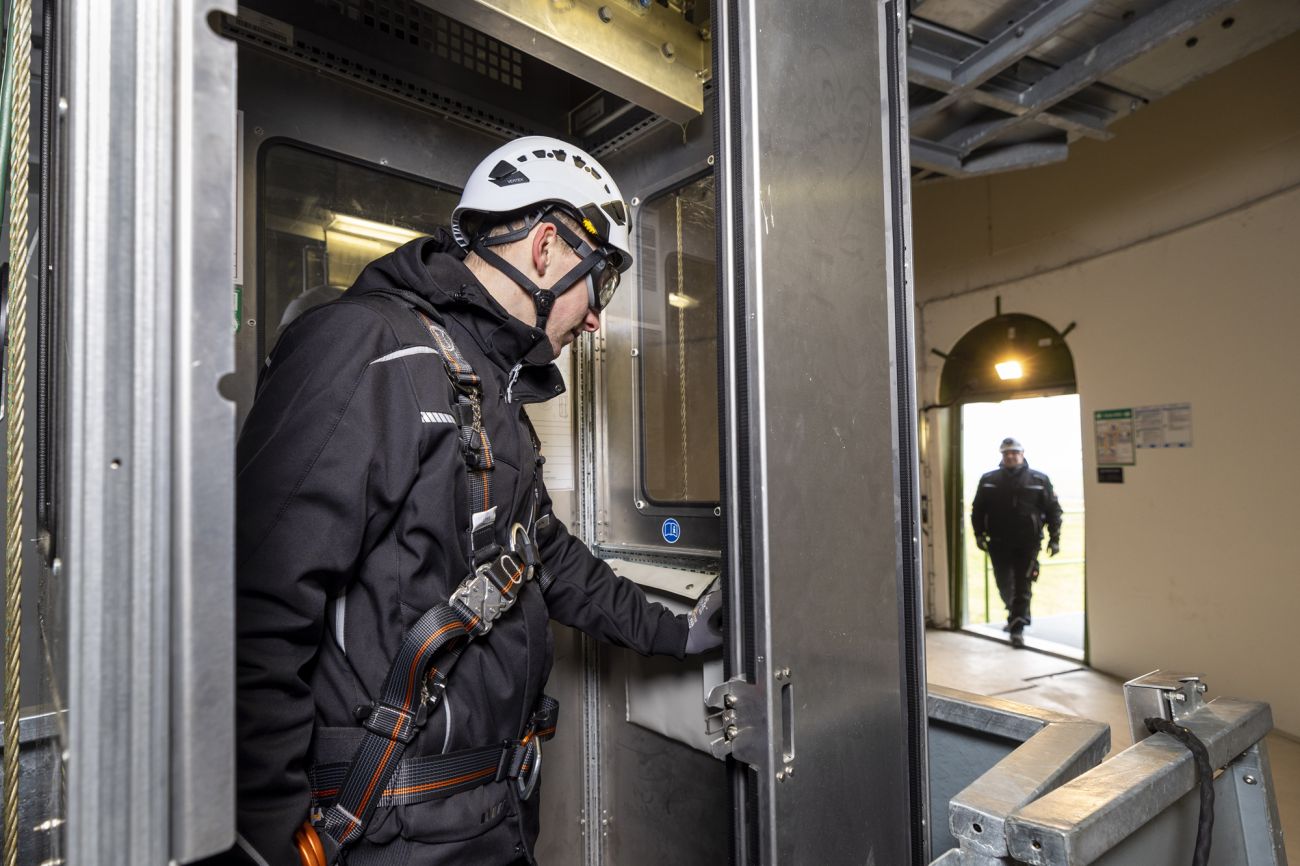
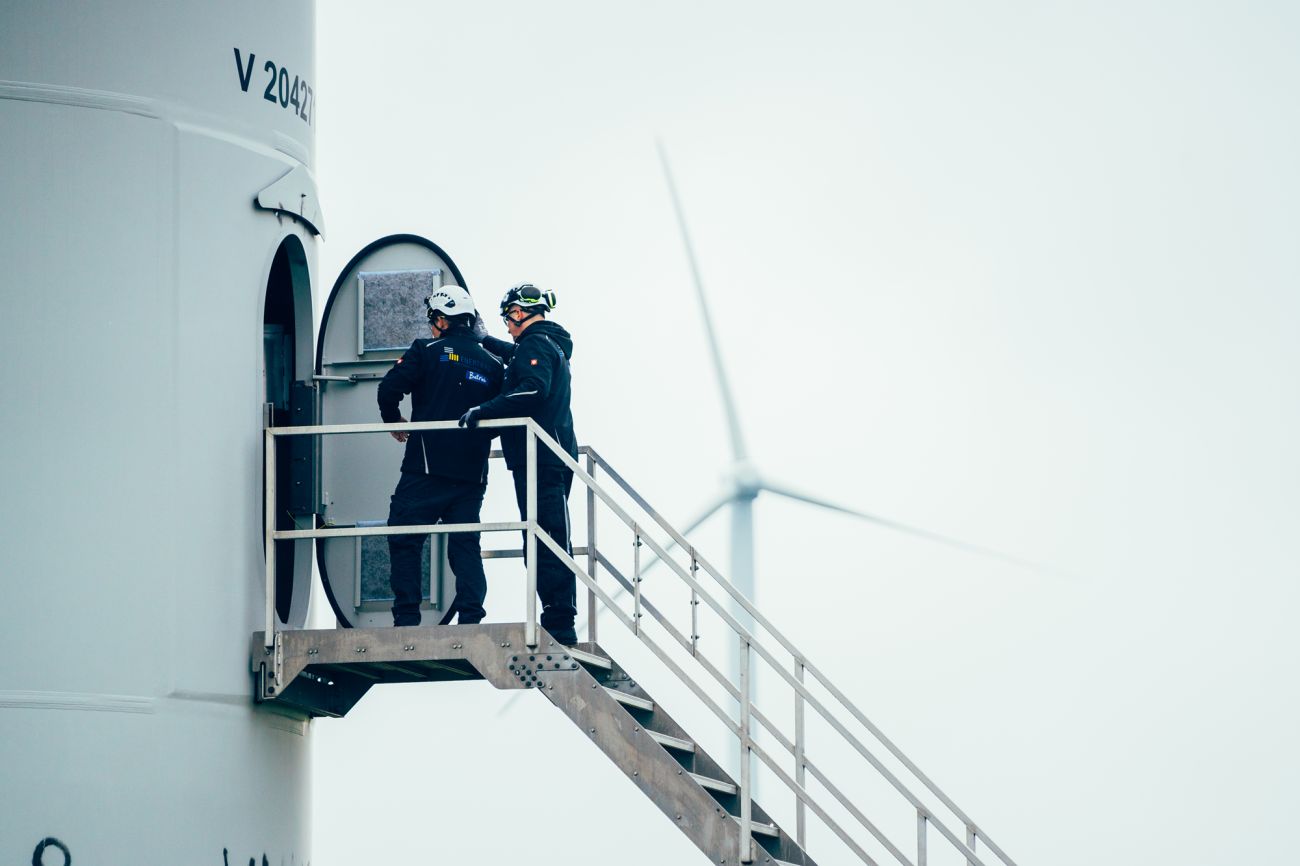
A complete safety inspection covers several safety-relevant systems at the same time. These include vertical ladders and fall protection systems, crane systems, service lifts including winch and safety gear, first aid kits, rescue equipment, personal protective equipment against falls and fire extinguishers. For service lifts, there is an additional obligation: the annual inspection by an approved inspection body, ZÜS for short. This inspection is regulated independently and must be considered independent of the general competence test.
Hydraulic systems in wind turbines are exposed to high stresses. Some systems record more than 1,000 pressure peaks per day. Without regular testing, there is a risk of material fatigue and, in the worst case, the failure of critical components. The periodic inspection of pressure accumulators, pressure vessels, valves and safety equipment is carried out in accordance with the Industrial Safety Ordinance, specifically in accordance with Section 16. Modern, non-destructive testing methods such as ultrasound detect internal material defects before damage occurs.
Contrary to what is often assumed, the competence test does not test the general skills of the operating personnel. It determines the functionality of specific, safety-relevant components. Experienced technicians check fall protection systems, ladders, fire extinguishers, rescue equipment and first aid kits as well as lifts, winches and cranes. If defects are found, many of them can be rectified directly on site.

For operators, it is worthwhile to have a partner who offers testing and repair together. In this way, short distances prevent unnecessary downtime. Minor repairs to fall arrest systems, ladders or lifts can often be carried out in the same time. If the right material is not in stock, an experienced service provider will quickly reorganize it and implement the repair immediately.
ENERTRAG Betrieb carries out the annual safety-related inspection, the ZÜS inspection of lifts as well as the pressure accumulator and pressure vessel testing for wind turbines throughout Germany, regardless of manufacturer and according to OEM standards. Repairs are carried out directly after the inspection, if possible on the same day. Interested operators can find out more about the scope of services and scheduling on the ENERTRAG page on safety inspections.
How is the dismantling market for wind turbines developing? What role do new standards, digital technologies and economic framework conditions play? ...
New three-year contract covers the BNK equipment of around 130 turbines in more than 20 wind farms – including numerous new construction and ...
Light:Guard GmbH has implemented a pilot project for an Aircraft Detection Lighting System (ADLS) at the Sønder Bork wind farm in Denmark. Over a ...
The digital transformation is giving the onshore and offshore industry an additional boost. At WindEnergy Hamburg from 22 to 25 September 2026, ...